



Home Blog Page 195

Top 7 Life Lessons From 100 Year Olds
0

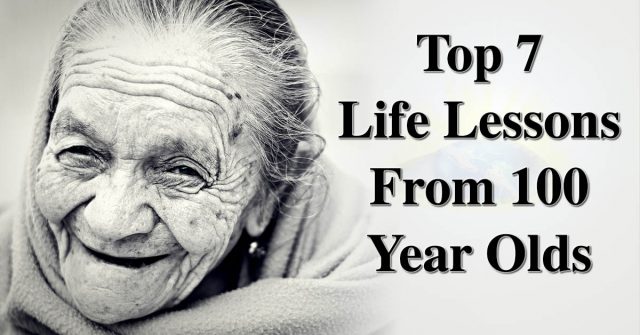
When we watch videos of centenarians, we notice something similar about them: they seem content. This may be surprising to those of us under 100, especially to anyone who fears old age.

Yet old age is something to look forward to, and in each recent decade we see the average life expectancy of people growing higher. Life insurance companies are now calculating that children born today will have an average life expectancy of 120 years, due to increases in science and medical availability. Healthcare will eventually be a right for all people, and this will cause medical breakthroughs to skyrocket, thereby increasing the ages our wonderful children will get to grow to.

In an interview of several centenarians (people over 100 years old), Dr. Mercola of the Mercola Video Library found some wonderful and useful advice for anyone looking to also live to be over 100 years old.

Here Are The Top 7 Life Lessons From 100 Year Olds:


1. Emotional Resilience and Optimism Help You Stay Young at Heart

The centenarians themselves look much younger than their age, and they don’t “act their age” either. They tend to act youthful and maintain positive attitudes about life, and this helps them stay young at heart.

Research has shown that positive messages can improve the health of seniors; in a study of 100 people with an average age of 81, those who were exposed to implicit positive messages experienced increased physical strength.

There are countless studies proving the power of the mind and how it affects the health of the body, and while usually named ‘The Placebo Effect,’ the reality is that what the mind believes, it also manifests within the body. If someone believes that their mind and body will fail as they age, it’s highly likely their way of thinking will contribute in creating the physical experience.

Yet it’s possible to use this in a positive and healthy way by believing the best about ourselves and our health. When combined with a healthy diet, regular exercise and enough sleep, positive thinking can keep you young and healthy for years to come! Most centenarians reported that they feel 20 or more years younger than they actually are, and this comes from their mindset and self-perception.

One of the jolly centenarians, 102 year old Denerley, said that he feels like he’s 69 or 79, and his body believes what he is thinking.


2. Centenarians Eat Healthy And Whole Foods

While none of the centenarians would be described as “health nuts,” they all did express the value in eating real food; home-grown, home-cooked, organic meals that are free from processing and chemicals.

This was the norm for them growing up before major food plants and companies existed, as their families grew their own food in gardens and ate fresh fruits and vegetables each day that were free of pesticides and chemicals and grease.

One of the key points from centenarians was eating well and eating health by consuming real food. They also mentioned the use of periodic fasting every so often; making sure to not overeat, eating only once or twice a day sometimes, or choosing on some days to just eat a light dinner.

In Okinawa, Japan, there exist a very high amount of people who live to over 100+ years of age, and a few of their secrets they have shared are only eating until you’re 80% full, being physically active and the consumption of miso soup which contains the healthy seaweed known as wakame that is loaded with vitamins.

3. Strong Relationships, Fond Memories and Living in the Moment

Having strong positive relationships was also highly recommended for a long life by centenarians. Research has shown that positive relationships can affect health just as much if not more than exercise and diet.

Each of them spoke lovingly and fondly of their marriages, and even though they had outlived their spouses by decades, they only look back on their memories with love, appreciation and gratitude.

One of the centenarians named Harper shared that she was able to live happily because she had a lifetime of wonderful memories to constantly remind her of the joys of life, and she said that experiences tend to make us happier than possessions.

The positive attitudes of those who live to over 100 years old is one to learn from and to mirror, as this is necessary to reach old age.


4. Helping Others Will Come Back To You A Hundred Times Over

Centenarians explained the importance of being kind and helping everyone you can. Helping others not only does something beautiful for them, but it’s proven to boost your own mood as well, helping you to stay positive and live longer.

Volunteering for a charity has been shown by research to both lower the chances for anxiety and depression, and it also improves your health. Sounds like a win-win situation right? If you are looking to live to be over 100 years old, consider volunteering for your favorite local charity and let your compassion give you a healthy and happy long life.

Volunteering and showing compassion also can give a sense of purpose and a possible “helper’s high” which is the release of feel-good chemicals in the brain and body and reducing stress hormones like cortisol.

In a study done by Stanford researchers, The Longevity Project reviewed 80 years worth of data to find what contributes to one living a long life. They found that having a sense of purpose, staying productive, and conscientiousness; purposeful action, self-discipline, and a drive to achieve were markers for longevity.

Staying active into your senior years by volunteering is a natural way to live longer, and also to benefit the world and those around you, making the world better for your children and for future generations. If you’re wanting to help but not sure where to start, just go to Google and type in “(Your city name) charities” and pick one that resonates with your heart. Sometimes a simple email or a simple phone call is all it takes to meet some wonderful people who share the same passion of bettering the world as you.

https://www.facebook.com/UnderstandingCompassion/photos/a.626035647536445.1073741829.624091487730861/1086433751496630/?type=3&theater

5. Being A LifeLong Learner Is Linked To Longevity

One of the only regrets mentioned by a centenarian was that he wished he had taken his studies more seriously earlier in life. He believed that getting a solid education early in life is so important and contributes to living a long and healthy life. A desire to keep learning throughout life has been shown to be connected to longevity, and there is a lot of interesting research connecting education levels and length of life:

Data provided by the U.S. Centers for Disease Control and Prevention (CDC) show that people with a college bachelor’s degree or above live for 9 years longer on average than people who do not complete high school.

This is likely due to numerous factors; that highly educated individuals get better jobs with higher incomes, are able to afford healthier food, are elevated out of poverty and do not have the daily stress of how to pay their bills that can negatively affect health. All factors included, having a higher education means a longer life on average, another wonderful reason to support the compassionate cause of providing free college to all hardworking students across the world.

See Also: Here Is What Happens To Your Body When You Quit Smoking!


https://www.instagram.com/p/Bf5YHazjDW5/?taken-by=understanding_compassion

6. There Is No Exact Pattern For How To Live To 100 And Beyond

While there is no guaranteed path of action to live past 100 years old, there are many useful and supportive tips. Genetics play a large role, and while not smoking, not drinking alcohol, eating healthy and exercising regularly are sure ways to remain healthy, they aren’t guarantees of longevity. Health professionals continue to recommend practicing healthy habits as they can greatly increase your chances for a long and happy life.

7. ‘Keep Right On To The End Of The Road’

Centenarians offered these pieces of advice for all of us on our way to 100 and beyond:

“Time spent on reconnaissance is seldom wasted.”

“Be as independent as you can but don’t be reluctant to ask for help when you think you need it.”

“A good idea is to behave well to other people, show them respect and help them as much as you possibly can, and it will be repaid hundred-folds.”

“Keep right on to the end of the road.”

Did you find this article helpful?

Let us know in the comments and consider sharing it to encourage your friends and family to live a long and healthy life!

Have a wonderful rest of your day. You are loved.


Source: https://articles.mercola.com/sites/articles/archive/2017/01/14/life-lessons-from-centenarians.aspx




Sachiko Tominaga Decided To Move To Laos To Help The Poor, And Has Opened 22 Schools For Children Living In Poverty

0

Sachiko Tominaga is well known in Japan for her amazing acts of kindness, but she has yet to become known to the world, until now. Her kindness has helped over 15,000 people have the chance to elevate themselves out of poverty in the country of Laos.

Sachiko was content with her previous life in Japan, where she spent her days at home as a housewife. Yet something in her heart told her there was more to life than just getting by, so she made the courageous decision to move to Laos and open a business.


Mrs. Tominaga now owns restaurants and hair salons where she chooses to employ young women to help them get out of poverty. She uses a majority of her profits to fund her charity work through her non-profit IV-Japan, where volunteers are able to help and support her cause.


Sachiko and a graduate student who received a scholarship through IV Japan. Img: Sachiko Facebook
Img: Sachiko Tominaga / Facebook

She began opening a school to teach young women how to be hair stylists, and teaching them how they can open up their own businesses. Hundreds of grateful young women express their gratitude to Mrs. Tominaga each time she visits them, and many have gone on to succeed tremendously in life.

She also visits areas of Laos that are very poor, where the children are provided little to no education and usually end up farming or doing anything to survive. She has opened 22 schools that allow these young ones to receive an education so that they may provide for themselves and for their families.

Img: Sachiko Tominaga / Facebook


She also provides housing for many of the young women who go to her schools. Sachiko is the kind of woman who even with such a large organization, personally will spend all day searching for a struggling teen addicted to drugs who goes missing from one of her schools, as those around her have reported.

Img: Sachiko Tominaga / Facebook

Sachiko’s kind and loving heart realized that there is more to life than just getting by each day, and by doing what she could to help the lives of those less fortunate, has truly benefited thousands of young children.

https://www.instagram.com/p/BgVR6G3gdeU/?taken-by=understanding_compassion

If you are passionate about helping a certain cause or organization, spend some time this week and reach out them and ask if there’s something small you can do to help. It might bring more joy to your life and to the lives of others than you can imagine.

You are loved.


How Fast Can You Find The Odd One In This Picture?

0

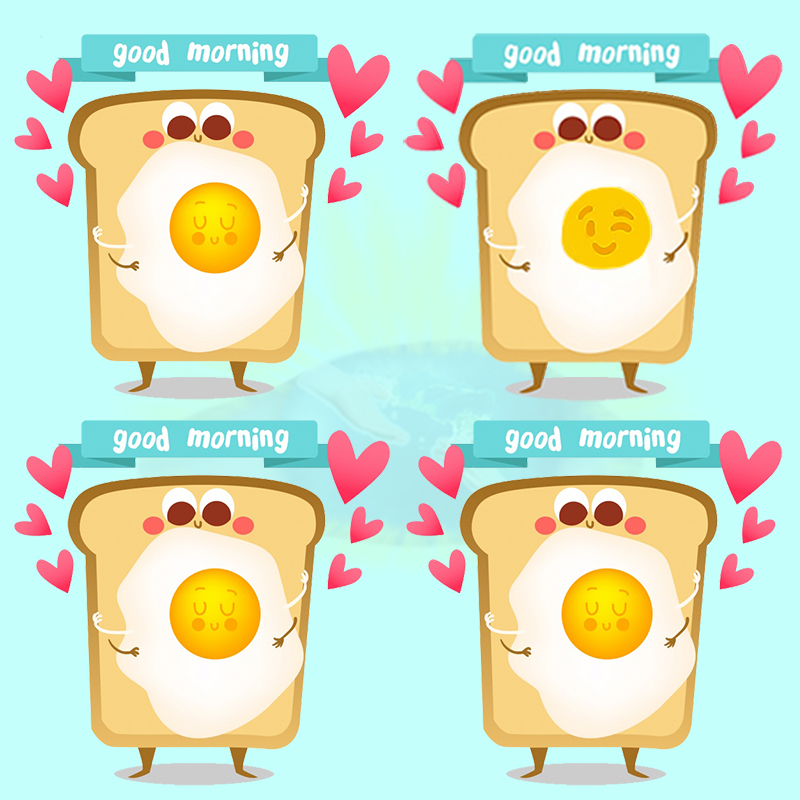
One of these yummy looking breakfasts is not like the others in each of the 5 pictures. How fast can you find them all? Visual learning games help both to improve and maintain various cognitive abilities. See if you can quickly identify which image is slightly different from the rest. One of them is different, and as you move further along they become more challenging to solve! Test your attention to detail with this fun and exciting game. How long will it take you to find them all?

Let’s begin:


1. Can you find the odd one out?

2. Find the different one!


3. Spot the odd one!

4. You’re doing great!


5. Keep going!

Were you able to spot all of the odd ones? If you did, congratulations! and if not, keep practicing and you will surely improve! If you managed to find all of them within 30 seconds, then you are among the 3% of people who have an amazingly quick attention to detail! Mind games and puzzles help to improve our cognitive abilities and help to retain mental functions, such as memory, so in actuality everyone’s a winner!

Let us know how you did in the comments.

Have a beautiful day. You are loved.


20 Incredible Psychology Facts That Everyone Should Know

0

Psychology is one of the most fascinating and important subjects that we have the privilege to learn about in our lives. Understanding how our minds, feelings and bodies work is essential to having happiness and inner peace in life.

Psychology is the science of behavior and mind, including conscious and unconscious phenomena, as well as thought. It is an academic discipline of immense scope and diverse interests that, when taken together, seek an understanding of the emergent properties of brains, and the variety of things they manifest. As a social science it aims to understand individuals and groups by establishing general principles and researching specific cases.

Below is a list of 20 incredible psychological facts that everyone should know:

1. A 20 second hug releases neurotransmitters that help you trust the one you’re hugging.

Oxytocin is released in the body when a person feels love, secure, safe and connected to their loved ones.

Through the release of this chemical, the brain knows that everything is safe and that there is no need to worry. (source)

What’s even better is that you don’t have to wait for a hug to receive the benefits of Oxytocin. Simply focus on the feeling of love in your heart, and allow that feeling to move to your entire body, and your mind and body will release oxytocin through your conscious decision to feel love. This is the healing practice of self-compassion.

https://youtu.be/x-dl1EFeezA

2. The more you spend on others, the happier you are.

According to various studies, when we give resources to others, we receive the reward of happiness.

“We’ve shown in our research that giving money to others actually does make people happier,” says Norton, an associate professor of marketing at Harvard Business School. “One of the reasons is that it creates social connections. If you have a nice car and a big house on an island by yourself, you’re not going to be happy because we need people to be happy. But by giving to another person, you’re…creating a connection and a conversation with that person, and those things are really good for happiness.”(source)

3. When you remember a past event, you’re actually remembering the last time you remembered it.

When remembering a memory, our brains also remember the last time that we remembered that memory.

Research conducted by Northwestern Medicine and published in the Journal of Neuroscience shows that recalling a memory more often makes that memory less accurate, and that every time you take a memory off the shelf in your brain, it gets put back just a tiny bit different each time.

This is why our memories and emotional connections to them change over time. (source)

4. The brain is more creative when it’s tired.

If you’re trying to do creative work, you’ll actually have more luck when you’re more tired and your brain isn’t functioning as efficiently.

When you’re tired, the brain is not as good at filtering out distractions and focusing on a particular task. It’s also a lot less efficient at remembering connections between ideas or concepts. These are both good things when it comes to creative work, since this kind of work requires us to make new connections, be open to new ideas, and think in new ways. So in many cases, a tired, fuzzy brain is of much more use to us when working on creative projects. (source)

5. The brain feels rejection as pain.

We all know that rejection hurts, but neuroscience has concluded that it does in fact get processed similar to the way pain does.

While the brain does not process emotional pain and physical pain identically, the reaction and cascading events are very similar, and the same natural chemical is released during both events. (source)

6. Multitasking is not what’s happening in the brain.

Don’t believe that you’re actually multitasking, scientists say.

New research shows that we humans aren’t as good as we think we are at doing several things at once. But it also highlights a human skill that gave us an evolutionary edge.

Researchers reported that, “You’re not paying attention to one or two things simultaneously, but switching between them very rapidly.”(source)

7. Your decisions are more rational when thought in another language.

Communicating in a learned language forces people to be deliberate, reducing the role of potentially unreliable instinct. Research also shows that immediate emotional reactions to emotively charged words are muted in non-native languages, further hinting at deliberation.

A university of Chicago study showed that Korean citizens who thought in foreign languages reduced their overall bias, a wonderful result. (source)

https://www.facebook.com/UnderstandingCompassion/videos/1065195023620503/

8. Relationships can be more important to your health than exercise and eating well.

University of North Carolina at Chapel Hill researchers found that the size and quality of a person’s social ties affect specific health measures, such as abdominal obesity and hypertension, at different points in their lives. (source)

9. No blind person has ever developed schizophrenia.

This was quite an interesting find.

Across all past papers, there has not been even one reported case of a congenitally blind person who developed schizophrenia. (source)

10. Your favorite song is likely associated with an emotional event.

The feelings are just as important as the words. (source)

https://www.facebook.com/UnderstandingCompassion/photos/a.626035647536445.1073741829.624091487730861/1095449173928421/?type=3&theater

11. Music impacts your perspective.

A study at the University of Groningen showed that music has a dramatic impact on your perception: even if there is nothing to see, people sometimes still see happy faces when they are listening to happy music and sad faces when they are listening to sad music. (source)

12. Chocolate discharges the same chemical in your body as when you feel love.

When we eat chocolate, several neurotransmitters are released in the brain that have a positive and comforting effect on human feelings.

One of the main neurotransmitters released is phenylethlyamine, which causes alertness, excitement, quickens the pulse rate and generates feelings of happiness.

Chocolate can arouse feelings similar to those that occur when someone is in love. (source)

13. Spending money on experiences instead of material things also makes you happier.

“We buy things to make us happy, and we succeed. But only for a while. New things are exciting to us at first, but then we adapt to them,” says Dr. Thomas Gilovich, a psychology professor at Cornell University who has been studying the question of money and happiness for over two decades.

So rather than buying the latest iPhone or a new BMW, Gilovich suggests you’ll get more happiness spending money on experiences like going to art exhibits, doing outdoor activities, learning a new skill, or traveling. (source)

https://www.instagram.com/p/Bfz_R1wDTcw/?taken-by=understanding_compassion

14. The average high school kid today has the same level of anxiety as the average psychiatric patient in the early 1950’s. 

Around 49% of people have at some point suffered from anxiety, depression, or some sort of substance abuse.

Yep, it wasn’t just you, you’re not alone. Psychologists have speculated about the possible reasons for this increase in both anxiety and depression over the last fifty years. Some of the reasons may be a decrease in “social connectedness”—we tend to move more, change jobs, participate less in civic organizations, and we are less likely to participate in religious communities. People are far less likely to get married, more likely to delay getting married, and more likely to live alone. All of these factors can contribute to worry, uncertainty, anxiety and depression. (source)

15. Certain religious practices lower stress.

“The American Psychiatric Publishing Textbook of Mood Disorders” shows that people who engage in meditation and prayer religiously are less stressed out. (source)

16. Money does buy happiness, but only up to $75,000 a year.

For the average American, $75k a year buys happiness. It liberates you from poverty and gets you what you need in life. So the reality is that being elevated out of poverty does in fact create happiness. Let’s strive to elevate the entire human race out of poverty. (source)

17. Being with happy people makes you happier.

For instance, in relation to one happy person:

The spouse has an eight percent increased chance of happiness.
The next-door neighbor has a 34 percent increased chance of happiness.
A friend who lives within a mile has a 25 percent increased chance of happiness. (source)

So do your best to fill your inner circle with those who are generally happy, and you will become happier as well.

18. 18 to 33 year olds are the most stressed out people on earth.

Family, education, work, each on it’s own can be stressful and together it adds up, especially for the millennial generation. There have been recent criticisms of millennials because they support taking care of those who suffer, of helping the poor, of supporting social programs, of doing good to their neighbors, for acting with love. Yet all of these are wonderful things that should be applauded and encouraged by the older generations, especially those who believe in the spiritual teachings of Jesus, Buddha and Mohammad.

They are the most stressed age group on Earth, so make sure you give as much love as you can to the millennials in your life.(source)

19. Convincing yourself you slept well tricks your brain into thinking it did.

The mind is a powerful thing, and our thoughts and beliefs create our feelings and the resulting health effects in our bodies. Believing you’ve slept well even when you didn’t causes your brain to register a good night’s sleep. They called it “placebo sleep”. (source)

20. Kindness is best learned through experience, rather than being taught to do it.

The neuroscience and social science research is clear: kindness changes the brain by the experience of kindness. Children and adolescents do not learn kindness by only thinking about it and talking about it. Kindness best learned by feeling it so that they can reproduce it. Kindness is an emotion that students feel and empathy is a strength that they share. (source)

You are Loved.

See Also: 8 Easy Ways To Stay Calm In An Argument According to Psychology

https://www.instagram.com/p/BgVR14xgDQm/?taken-by=understanding_compassion

While Stuck In An Elevator, This Kind College Student Became A Human Chair For A Tired Older Woman

1

Be the reason someone believes in the goodness of people, just like Cesar Larios of College Hunks Hauling Junk moving company.

A student from the Art Institute of Florida was working helping someone move apartments when the elevator got stuck in the 10 story building.

A few men and an older woman were in the elevator when it unexpectedly stopped working, and they became trapped inside. They eventually made some phone calls for help, and while waiting for help to arrive, the older woman became tired and explained that she was unable to stand for long periods of time.


After hearing this and instead of spending his time in the elevator being stressed along with the older woman, Cesar Larios decided to get down on his hands and knees and become a human chair for the struggling lady. His act of kindness was greatly appreciated, and eventually help was able to come free them from the elevator.

“We were riding with a very nice elderly women,” said Cesar Larios. “As soon as it got stuck the lady said she could not stand for extended periods.”

“I offered to serve as a chair,” the 23-year-old said. “She was so thankful.”

https://www.instagram.com/p/BgVR14xgDQm/?taken-by=understanding_compassion

For 30 minutes straight he sacrificed his own comfort in a stressful situation so that she could rest her legs.

“I thought this was a great example of old-fashioned service and helping your fellow neighbor,” said Co-Founder & President of College HUNKS Nick Friedman. “The response to the picture is mind blowing. Thousands of people are sharing it and posting it on social media. I think what’s great about it is that it’s a genuine moment caught on camera. A lot of people say the younger generation has lost certain values. But one small picture shows that chivalry and hard work are still very much alive in our youth.”

“He is my son, and I am SO PROUD of HIM,” Cesar’s Mom, Olga Lourdes Ruiz Velasco, commented.


Compassion brings us to a stop, and for a moment, we rise above ourselves.

If you notice an older woman or man who looks like they could use some help, take a moment and see if you can do something for them. Everyday things become harder to do as we age, and even the smallest effort of kindness can be so greatly appreciated by our beloved grandmothers and grandfathers. You might just make a friend of the heart too while you’re at it.

You are Loved.