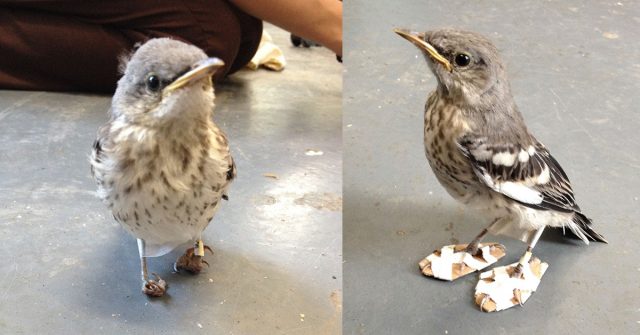
This baby mockingbird had injured her feet, causing them to ‘knuckle’ and making it difficult to near impossible for her to perch, walk around, or grasp objects.
Fortunately, some wonderful human beings at the California Wildlife Center came into contact with this baby bird and were able to craft her some Happy Feet.
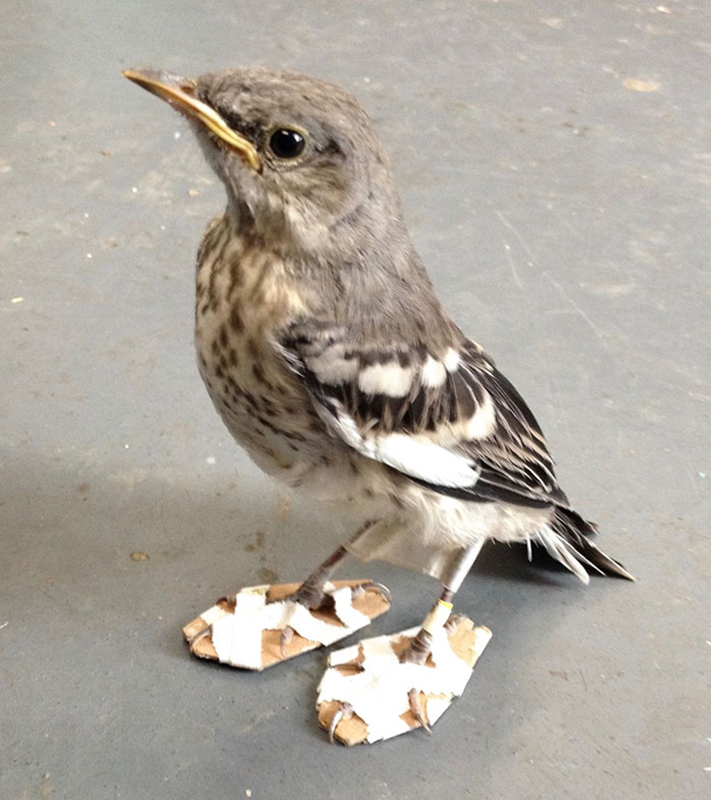
Rescuers created two tiny “snowshoes” that were taped to her feet, which after two weeks of learning how to walk normally in them, her feet are able to adjust and heal.
“We needed to train her feet back to how they should be,” CWC veterinarian Duane Tom said. “Essentially, we used pieces of cardboard to tape her toes into their proper position. It usually takes a week or two of wearing the snowshoes before their feet are back to normal.”
Photo Credit: Lorraine Barbosa/California Wildlife Center
And the good news is, her feet were able to fully recover and she was released back into the wild successfully.
Photo Credit: Lorraine Barbosa/California Wildlife Center
The suffering of animals can often go unnoticed, and even the tiniest effort can brighten the day or even the life of an animal who is struggling.
If you come across an animal who is injured or suffering, try to help them get in to a local animal shelter or veterinary clinic, and you just might witness something as wonderfully cute as this! If you’re lucky, you also might receive a heartfelt smile of gratitude from one of these precious little ones, as relief and happiness enters their life again.
“Appreciate those who love you and help those who need you.”
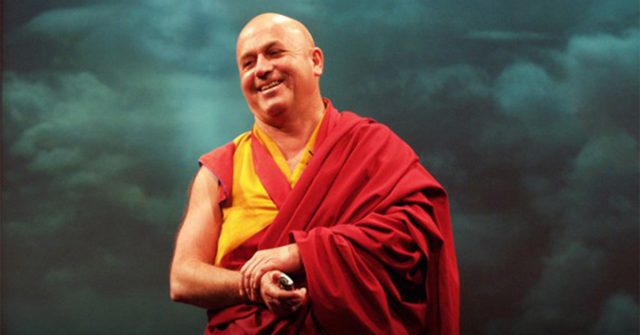
It might not be who you expect it to be, but according to researchers Matthieu Ricard, a French genetic scientist, is the world’s happiest man. The jolly 72-year-old has a PHD in molecular genetics, and later moved to India to study Buddhism. His passion moved from being a scientist, to being a scholar of deep happiness. He is also close friends with the Dalai Lama.
Richard Davidson, a Neuroscientist, conducted research on Ricard’s brain cells by wiring 256 sensors on his skull while he meditated on compassion. The study at the University of Wisconsin generated unexpected results.
According to Richardson, it displayed a significant level of gamma waves ‘never reported before in the neuroscience literature’. These were gamma waves linked to consciousness, attention, learning, and memory.
Daily meditation has heightened Ricard’s ability to be happy. And the main secret to his happiness is compassion.
Aside from these findings, the study also showed a difference in the activity between his left and right prefrontal cortex. There was higher activity in the left cortex enabling him to have a stronger inclination for happiness and a lesser tendency to feel negative.
According to Ricard, “We have been looking for 12 years at the effect of short and long-term mind-training through meditation on attention, on compassion, on emotional balance.”
“We’ve found remarkable results with long-term practitioners who did 50,000 rounds of meditation, but also with three weeks of 20 minutes a day, which of course is more applicable to our modern times.”
Their main findings centered around neuroplasticity, which is the brain’s ability to change or adapt throughout a person’s life. Ricard and other scientists all over the world have pioneered experiments for this study.
Here Are Matthieu Ricard’s 7 tips for learning and practicing meditation:
A healthy mind should act like a mirror – faces can be reflected in a glass but none of them stick. Use the same technique with thoughts – let them pass through your mind but don’t dwell.
2. Focus On Your Breathing
Our mind travels to different thoughts and it is impossible to stop them from always occurring. However, it is possible to control the mind by directing it rather than drifting from one thought to another. Listen to the sound of your breathing going in, and going out. Think of it as directing your mind like a boat, using your focus and by relaxing into it. When you are in control of your mind, you are not a slave to your own thoughts.
3. Stay In The Moment By Feeling The Movement Of The Breath
Being mindful means paying close attention to the vibrations of your breathing as you inhale and exhale. This helps you to focus on the present moment, the ‘now’ rather than drifting off to the past and the future. If your mind starts to wander, you can bring it back to focus on paying attention to your breathing. Aside from this, concentrating on other sounds and the temperature of your environment also helps.
4. Focus On And Cultivate The Love In Your Heart
Once you’ve practiced this a while and achieved some skill, you can use it to cultivate qualities such as kindness, or dealing with disturbing emotions. He says everyone has felt all-consuming love but usually it only lasts for about 15 seconds, but you can hold on and nurture this vivid feeling by focusing on it in meditation. If you feel it becoming vague you can consciously revive it.
5. Practice Regularly
It is just like when you are practicing playing the piano. The more time you spend practicing, the better you become. Like watering a plant until it grows, practicing regularly will grow your happiness.
6. Find Peace In Not Identifying With Your Feelings
Meditation is also useful in clearing your mind and heart of negative emotions. According to Ricard, when we are aware of our emotions, it is like looking at fire as it burns. You are merely aware of it. You are conscious of it, but it does not mean you are experiencing it. When you are aware of being nervous, the part that is aware is not nervous itself. Experiencing this peace towards the emotions themselves is a great key to maintaining balance and relaxation within the varying emotions that we experience each and every day.
7. It’s Worth 20 Minutes A Day
Benefits will appear within a month of practice, as stress levels decrease and general feelings of wellbeing increase. Those who say they don’t have enough time to meditate should look at the benefits: If it gives you the resources to deal with everything else during the other 23 hours of your day; it’s a very worthy and valuable way to spend 20 minutes.
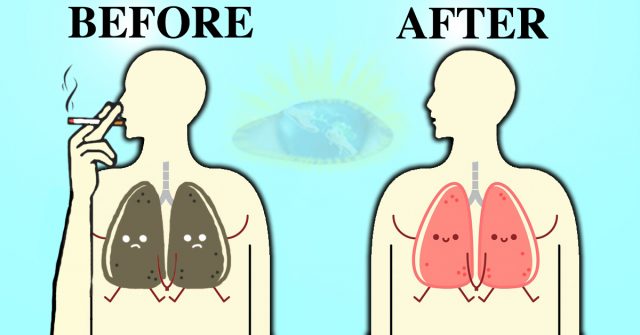
Tobacco smoke contains a deadly mix of more than 7,000 chemicals; hundreds are harmful, and about 70 can cause cancer. Smoking increases the risk for serious health problems, many diseases, and death. – Centers for Disease Control and Prevention
Nicotine in any form is a highly addictive substance found in tobacco. The Centers for Disease Control and Prevention (CDC) found that more people are addicted to nicotine than any other drug, which may be as addictive as alcohol, cocaine, or heroin. Withdrawal symptoms, weight gain, and stress are the three main reasons people “light up” again and again.
Anyone can stop using nicotine given the proper advice and guidance. Nobody should be misinformed: abstaining from nicotine is difficult, and often requires several attempts. But it can be done. It is also entirely possible to detoxify nicotine naturally. Below are some simple steps how:
Without a doubt, purified water is the most effective way to drive out toxins from the body. Water consists of properties that seem to decrease cravings for nicotine; unlike alcohol, which often stimulates nicotine cravings.
Drinking at least a half-gallon of water daily is not only effective in flushing toxins, but it also provides the energy necessary to enable one to quit. A good idea is to always bring with you a large water bottle and keep it filled. You’ll naturally find yourself reaching for some H2O.
2. CHANGE YOUR DIET
A diet based largely in fruits and vegetables can help the body naturally rid itself of nicotine’s toxins mainly due to their high levels of antioxidants. Also, consuming plenty of fruits and vegetables can help shed off the few extra pounds gained after quitting.
Both broccoli and spinach are “superfoods” (nutrient-dense foods) high in folic acid, and vitamins C and B5. Nicotine use depletes these nutrients, yet consuming more of them can reduce nicotine cravings, and strengthen the immune system, helping with the detoxification process.
Img: Pixabay
3. EXERCISE
You’re going to need some physical activity to help detox. Engage in any exercise for at least 30 minutes a day. Exercise allows the body to perspire which drains large amounts of toxins out of your body.
Also, physical activity aids in dealing with the stress and agitation that often accompanies someone trying to quit nicotine. Moreover, exercise serves as a great alternative when experiencing cravings.
Exercise also invokes the release of endorphins, and other feel-good chemicals in the brain. This effect often leads to being hooked to exercise – a much healthier alternative than nicotine.
By choosing to not smoke – and by following this advice – your body naturally detoxes and heal itself from previous nicotine use. But the truth is that you’ll still experience cravings, and some of these episodes can be rather strong.
Keeping your mind preoccupied with work or play, and play is preferred, will help suppress some of the natural impulses to use tobacco.
When you find yourself craving, focus on the task at hand. Read something interesting on your phone, or challenge your brain with some fun activity. Distractions can serve as a wonderful tool to stop cravings, and during this time your body will continue to detox and your ability to resist becomes stronger.
5. PRACTICE MINDFULNESS AND MEDITATION
The practice of mindfulness is allowing thoughts and feelings to arise and to go, without becoming attached or identifying with them. Acknowledge the craving (thought and feeling), but don’t interact with it or overthink it. These feelings will eventually go away, and your body will keep detoxifying and will naturally heal.
Practice mindfulness and meditation for 15 to 20 minutes a day and enjoy the ability to further reduce your cravings and detox your body from nicotine.
“We are such stuff as dreams are made on; and our little life is rounded with a sleep.” – William Shakespeare
Most of us are captivated by success. We love reading success stories and learning how we ourselves can become successful. We especially love to learn the “tricks” of success. Think about how much money people have made through the production of success-related media, books, CDs, DVDs, classes, conferences…the list goes on.
Do you ever wonder what successful people do before bedtime? We asked this question ourselves, and found some of these bedtime habits very intriguing.
1. THEY READ
One thing behavioral experts have discovered is that reading is the very last thing a number of successful people do before going to sleep.
From business tycoons like Bill Gates; to national leaders like Barack Obama, to fashion designers such as Vera Wang – reading is considered a non-negotiable activity for many successful individuals.
2. THEY HAVE AN “UNWINDING” SESSION
One thing successful people rarely do before bed is work. Of course some are purebred workaholics and prefer doing work until the wee hours of night – but this is an exception to the rule.
To “unwind” is to do something not work-related; something relaxing, and there are many ways to do this.
Some people love to take a trip down memory lane. This helps them remember the important things in life and to stay motivated.
In order to be successful, one must learn to recognize when a break is needed.
4. THEY DAYDREAM
Img: Pixabay
No surprise here. Many successful individuals cite daydreaming or mind-wandering as gateways that have brought them to the next level of success.
This is particularly true for creative individuals such as artists and innovators. Aside from this, people will daydream in order to find peace of mind or gain inspiration or wisdom.
5. THEY PLAN FOR TOMORROW
People that have achieved great success are known for their undeniably incredible work ethic – an attribute that often requires working above and beyond the normal routine. While they may not do anything too stressful before hitting the sack, they always plan for the next day.
Successful people understand this short planning time makes the flow of tomorrow’s activities clearer and hassle-free.
6. THEY’LL UNPLUG FROM EVERYTHING
Avoiding heavy work, relaxing, and recharging often requires a complete disconnection from the phone, computer, tablet, or any other digital device.
Furthermore, researchers found that use of electronic devices prior to bedtime makes it harder to fall asleep – and a good night’s sleep is an essential component of a successful person’s life.
7. FAMILY COMES FIRST
For most people, including the very successful, family always comes first. Balancing their demanding work schedule and quality time spent with their partner, children, pets, etc. can be challenging at times, but it is of great value to them for good reason.
Successful people take the time to ponder on or write down things that they appreciate in their lives. This is very important habit for successful people, as their day usually contains a large amount of challenging and stressful situations.
Too much stress breeds negative thinking, and a pessimistic outlook is not something that successful people can have in their lives.
As previously mentioned, the high demands on successful people mean that they often can’t avoid many stressful circumstances. Any person that has been exposed to high levels of stress over a long period requires some duration of time for rest and recreation.
For some, this means going to the gym. Others like to do yoga, listen to relaxing music, or take a hot shower. The list is endless, but the goal is the same: decompression.
10. THEY ABSTAIN FROM ALCOHOL
While some don’t completely abstain, and some choose sobriety, most successful people refuse to drink alcohol right before bedtime. Whether intentional or not, people abstaining from booze before bedtime improves their quality of sleep.
The National Institute of Health has discovered that drinking alcohol prior to sleep “robs people of deep sleep and REM sleep and keeps them in the lighter stages of sleep.”
Have any of these tricks helped you become successful in your life? Let us know in the comments. Have a blessed day.
There’s a big difference between being alone and feeling lonely. Feeling lonely is a choice; not everyone who is alone feels lonely. In fact, many people deeply need and enjoy their alone time.
Once we learn to embrace the value of being alone, we realize these 11 amazing benefits:
1. You make the plans
While it’s good to follow the group at times, when you’re alone you get to steer the ship and decide which plans you make. Being alone means you don’t have to compromise on what you want to do, you can fully pursue everything you wish.
2. You get more done
In general, when we have alone time we’re able to focus on our work. While it’s nice to be around others, they can serve as sources of distraction and can keep us from accomplishing the things we want to do. Being alone allows us to focus and to really get a lot done.
3. You strengthen your independence
Everyone strives to be independent and likes to view themselves this way, but how independent are we? Once you spend some time alone, you are able to understand how attached we’ve become to needing others, when in reality we are quite self-sufficient. During our alone times, we can truly practice our independence.
4. You get a full recharge
As lovable and wonderful as people are, it requires time, attention and energy to interact with them. If we are constantly surrounded by others, we sometimes become unaware of our own energy levels and that we need to recharge our own batteries. When you’re alone, you get much needed time to rejuvenate your energy.
5. You can face your own feelings in a healthier way
Being alone allows you to truly embrace and get in touch with your emotions. Turning our focus inwards helps us understand the way our feelings work, from thoughts, to feelings, and vice-versa. Learning about ourselves, and ‘knowing oneself’ is the only true way to become wise. Being surrounded by the busyness of life and many people can cause us to lose our awareness of our inner emotional state if we’re not careful, and also can cause us to suppress our feelings. Being isolated for a time allows our feelings to emerge and gives us time to fully understand them.
6. You gain validation from within
Many people seek validation from outside of themselves, seeking the approval and attention from others in order to feel good enough. This is a very draining and insecure attitude to take, as it depends on the views of another person. After understanding our own imperfections, we can also understand how imperfect other people are, and that our self-worth and self-images should not be decided by the opinions of others. We are always ‘good enough’ and ‘worthy’. When we are alone, we are able to validate ourselves by ourselves, giving us strength and a healthy self-esteem.
7. You don’t have to please or offend anyone
Being alone allows us to let our guard down for a bit and to be natural and raw with who we are. While it’s truly wonderful to be kind and to care for others, we all need some rest from thinking about how our behavior, words and actions have affected others. Being alone allows us to focus on ourselves and our needs, and we deserve every bit as much love as we give to others. You can’t pour from an empty cup.
8. You learn to appreciate the people around you more
Similar to how eating too much chocolate can make us not want to eat any for a while, when we have too much of something we sometimes are unable to fully appreciate it. Being around others is similar. When we have some alone time, we begin to appreciate the time we spend with others more.
As we face the day to day of our lives, reflection is very important in understanding where we are at and where we want to go. Being alone gives us this much needed time to reflect and to get a good bearing on where we’re headed. Reflecting is one of the main ways we learn about ourselves and about life.
10. After reflecting, you can finally let go
Many of the thoughts that lead us away from the present moment are connected to things we haven’t fully thought about and evaluated. After spending a bit of time reflecting on these things, we can understand the message and finally let go, allowing our energy to return to ourselves.
11. You discover parts of yourself that you didn’t know existed
Through being alone, you get a chance to rediscover yourself; to understand the parts which have been neglected through constantly being busy during daily routines. The constant noise and endless conversations we engage in or are subjected to by being near others are allowed to quiet down as we explore what our own energy feels like. Being alone is empowering as our minds are allowed to become quiet as we fully experience ourselves.
“Sometimes I need to go off on my own. I’m not sad. I’m not angry. I’m just recharging my batteries.”