



Home Blog Page 207

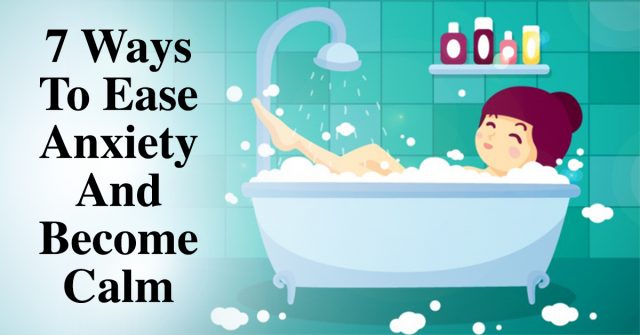
7 Ways To Ease Anxiety And Become Calm
2

Anxiety can be a stressful and uncomfortable experience for anyone. Learning the best way that works for us to regain our calm can be a wonderful and empowering way to breathe a sigh of relief.

Here are 7 ways to ease anxiety and to become calm that are sure to help you feel relieved:


1. Practice Deep Breathing

Science has shown a link between deep breathing and reduced anxiety. Deep and slow breathing is accompanied by feelings of calm and relaxation, while fast and shallow breathing is accompanied by feelings of anxiety and tension.

This is all connected to the fight-or-flight response of our nervous system. By practicing deep breathing if or when you feel anxiety, you are creating the action which signals to your body that it’s okay to relax, and the body naturally creates the feelings and associated neurochemicals that generate relief and reduce muscle tension.

Practice deep breathing by breathing in and counting 1…2…3…, then breathing out and counting 1…2…3… Repeat this practice until you begin to experience reduced tension and a bit of relief.

The mind may naturally begin to trigger thoughts and feelings associated with the worry or anxiety (fight-or-flight response), but remind yourself that you are practicing to become calm, and continue the deep breathing. The relaxation and deep peace from focusing on the breath feels great, so enjoy your practice 🙂


2. Talk Through the Experience

https://www.facebook.com/UnderstandingCompassion/photos/a.626035647536445.1073741829.624091487730861/1054446934695312/?type=3&theater

Many times, people become anxious when they have something unnerving to do and they don’t know what to expect. Do you have a presentation to give? Are you nervous about going to the dentist or a doctor’s appointment? There are many different causes for anxiety, and anticipation or fear of the unknown can be one of them. In this situation, it helps to talk to someone about it.

Don’t keep your fears and anxieties to yourself, this only strengthens them and leaves fearful and nervous thoughts unchallenged.

By talking with a professional psychologist, a trusted friend, or a loving family member about our anxieties, we open up about our experience and can receive much needed support and understanding. Sometimes talking with another person can help keep our fears in check, and help us to realize that we may be overthinking a situation or that even there isn’t all that much to be worried about.

3. Listen To Peaceful Music

The power of music as an anti-anxiety agent has been studied for decades. Research proves certain types of music elicit a wide variety of physical and emotional responses, and certain songs are even proven to reduce anxiety.

For example, slow tempos can relax muscles and soothe the mind. By listening to soft, peaceful and relaxing music; either in your room or by using headphones, you can offer yourself fast anxiety relief. If you’re not sure which music to choose, we recommend Enya, and various playlists of healing Reiki music.

4. Start The Day Right

Img: Freepik

Do you awake each morning to an alarm clock designed to shock your nervous system, drink some coffee designed to increase your alertness and nervousness and then skip breakfast or eat something fast and unhealthy before rushing off to work? If you answered yes to any of these, then it’s time to rethink a few of them in order to feel less anxious each day.

How we begin each day sets the mood for our emotions until we rest again and allow our minds and feelings to reset. Waking up to a stressful alarm clock can make the entire day feel stressful. Instead of this, use an alarm clock on your phone that is set to something more peaceful or even a song that you enjoy.

While it’s hard to talk people out of their daily coffee, if anxiety is something you struggle with, then it’s very important to consider. Caffeine, found in high amounts in coffee, is a stimulant, and consuming too much caffeine causes anxiety. The effects can last for as long as the coffee is in your system. Try replacing it each morning or even a few mornings each week with fresh squeezed juice and see how your anxiety decreases!

Eating a healthy breakfast is also important in maintaining a positive mood throughout the day, as the body requires some energy before you make it to lunch. Try adding some fresh fruit, yogurt or oatmeal to your breakfast to help relieve anxiety.

As a bonus, if you are very serious about reducing your anxiety, wakeup a few minutes early each morning and practice Yoga stretches. The effects of Yoga and relieving anxiety and tension are profound, and by starting your day right by helping your body feel good, it can keep you feeling happy and calm for the entire day.


5. Reward Yourself With A Treat

Img: Pixabay

If you’re dreading going somewhere or doing something and this is causing you anxiety, often times promising to reward yourself with something you enjoy can act as the extra motivation you need to get it done, and can relieve a bit of the anxiety in thinking about it; as you know you will feel good after.

These rewards don’t have to be expensive; they can be a yummy meal at your favorite local restaurant, a warm and soothing bath, spending time by the fireplace with a loved one, listening to music while reading your favorite book, or drinking warm tea while watching your favorite movie. Knowing that you have a reward waiting after you complete a task can add some feel good feelings to the nervousness and help to relive it.

6. Educate Yourself And Try To See Things In A New Light

If you are aware of what is causing your anxiety, sometimes it can be the perspective we take about the situation that causes the nervousness, rather than the experience itself. It’s likely that someone somewhere else may feel entirely different about the situation than you, and this is because of their different opinion and past experiences.

Fear comes when we are faced with what we don’t understand; so educate yourself as much as possible on the situation you are dealing with: read verified online articles, read books, seek advice from professionals. Knowing your situation as well as an expert is sure to shine light on the dark areas of fear and worry, and a certain level of relief and comfort comes with knowing the truth about the situation.


7. Focus On One Thing At A Time

Overthinking causes anxiety. A natural response to a challenging situation is to begin thinking about solutions. Yet when an easy solution cannot be reached, the mind tends to overthink; to go into overdrive trying to find a solution.

The association with worry and overthinking is strong, and doing one usually increases the other. Stress and anxiety usually happen when more than one thing is bothering us in our lives. When we are facing one stressful situation we can most likely handle it, but when it is followed by a second, and then a third situation within a short period of time, this is when we can get overwhelmed by stress, anxiety and worry.

Instead of getting overwhelmed by thinking of several things at once, deal with one thing at a time. Maintain your focus on one situation, and do your best to remedy it. After you’ve dealt with one, then you can deal with another. This will help you to relieve the anxiety felt from having to deal with too many things at once.

If things are just too overwhelming, take a step back, and tell your worries you are taking a worry vacation, even if just for one day. Put your troubles aside and give yourself a day or more of rest where you don’t deal with or think about the things that are worrying you. You deserve peace, and your worries can wait 🙂

Did any of these tips help you to reduce anxiety and remain calm? Let us know in the comments.

We love you dearly.

This Test Will Reveal If You’re Attentive to Details (See All 5 Pictures)

0

If you you have excellent vision then test your skills in this ‘spot the difference’ quiz. It tests how well you can spot all of the differences between sets of pictures. Such mind exercises can enhance and retain mental function as we age. Note: these ones are a little challenging!


Researchers E. J. Meinze found evidence to suggest that a high level of experience with mind puzzles and crosswords in older subjects does seem to partially attenuate the negative effects of age on memory and perceptual speed tasks (Psychology of Aging, Volume 15 [2], 2000, pp. 297-312).


Find all 5 differences in the 5 photos below:

1. Can you spot the difference?


2. Can you find the difference?

3. Keep Going!

https://www.facebook.com/UnderstandingCompassion/photos/a.626035647536445.1073741829.624091487730861/1054441234695882/?type=3&theater

4. You’re doing great!


5. Almost there!

If you managed to get 4 out of 5 or higher, then you have better visual skills than most and should definitely count yourself as one who is attentive to details. These pictures were among the hardest, so congratulations!

How did you do? Let us know in the comments.

Have a blessed day!

Answers:

1.

2.

3.

4.

5.


Immigrants Do Not Increase Crime, Research Shows

0

What does research say about how immigration impacts crime in U.S. communities? We turned to the experts for answers.

Research has shown virtually no support for the enduring assumption that increases in immigration are associated with increases in crime.

During the past 20 years, Immigration-crime research has found no backing for the immigration-crime connection. While there are always individual exceptions, these are of very small percentages: less than .001%. The real numbers demonstrate that immigrants commit fewer crimes, on average, than native-born Americans.

Interestingly, it was also found that big cities with large immigrant populations have lower crime rates, on average, than those with small immigrant populations.

Census data spanning four decades from 1970 to 2010 for 200 randomly selected metropolitan areas was analyzed by researchers, which allowed them to assess whether the relationship between immigration and crime changed in association with the broader U.S. economy, the origin of immigrants, and the number of immigrants.

https://www.facebook.com/UnderstandingCompassion/videos/vl.130125724388346/904487009691306/?type=1

The most important finding from the research was that for murder, robbery, burglary and larceny, as immigration increased, crime decreased, on average, in American metropolitan areas.

These associations are strong and stable evidence that immigration does not cause crime to increase in U.S. metropolitan areas, and may even help reduce it.

Researchers believe that it’s possible that immigration reduces crime by revitalizing urban neighborhoods and by creating vibrant communities through generating new economic growth, thus reducing poverty levels in such areas and the associated crime that comes with poverty.

Verified Statistics On Illegal Immigrants

While nearly everyone agrees on the value of immigrants in America, as America is the world’s great melting pot of immigrants, many believe that immigrants living in the U.S. without a proper visa, or “illegally,” are prone to higher levels of crime. Research was conducted to find the exact statistics on crime and illegal immigrants in the state of Texas, and compared it to the crime levels of legal immigrants and native-born Americans.

The research discovered that undocumented immigrants are considerably less likely to commit crime than native-born citizens, with immigrants legally in the United States even less likely to do so. A large amount of verified studies published by different universities in different locations clearly illustrate the consensus:

The first study, published by the libertarian Cato Institute in February, examines criminal conviction data from 2015 provided by the Texas Department of Public Safety. It found that native-born Americans committed more crimes than both illegal immigrants and legal immigrants.

There were 56 percent fewer crimes committed by illegal immigrants than by native-born Americans in Texas in 2015.

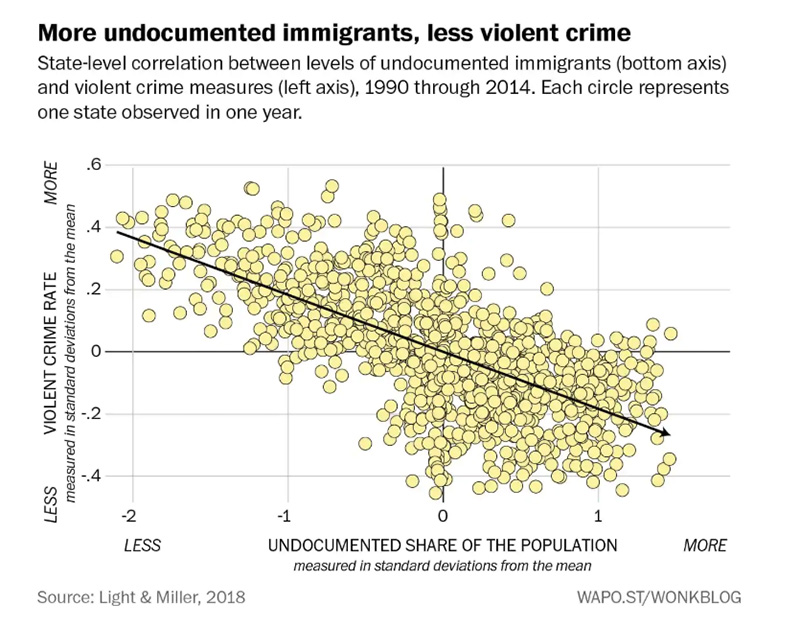
The data showed similar patterns for violent crimes such as homicide and property crimes such as larceny. The following graph shows violent crime rates from 1990 through 2014 and scales based on documented or undocumented people living in America:

This revealing study, published in the journal Criminology, looked at population-level crime rates: Do places with higher percentages of undocumented immigrants have higher rates of crime? The answer came simply from looking at the very real data; a very clear no.

States with larger shares of undocumented immigrants tended to have lower crime rates than states with smaller shares in the years 1990 through 2014. “Increases in the undocumented immigrant population within states are associated with significant decreases in the prevalence of violence,” authors Michael T. Light and Ty Miller found.


From all of the research one finding remains clear: Cities and neighborhoods with greater concentrations of immigrants have lower rates of crime and violence for both legal and illegal immigrant populations.

While many have been coerced into believing that immigrants are suddenly dangerous, the real numbers and statistics show that immigrants are actually safer to be around than those who were born in America.

https://www.facebook.com/UnderstandingCompassion/photos/a.626035647536445.1073741829.624091487730861/1086433751496630/?type=3&theater

America is a great nation built on immigration, the great melting pot of the world where people of various cultures come together to live in a land of freedom.

If you know a recent immigrant or meet someone from another country, go out of your way to be a little kinder to them this week. All of our ancestors were immigrants just a few generations ago, at a time when America welcomed all people with open arms without papers or ID’s. Those fleeing poverty and persecution left their home countries and were lovingly embraced by America; that’s what the American dream is all about.

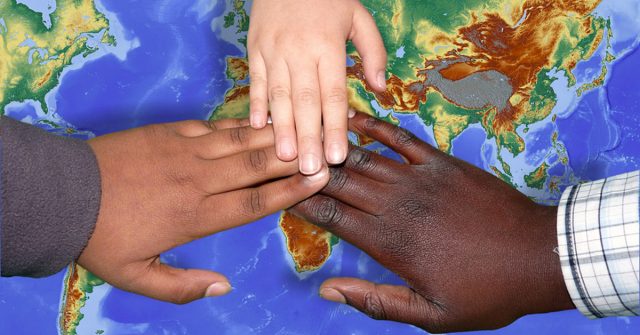
All humans are one family, we’re all brothers and sisters, who immigrated out of Africa just a few thousand years ago.

Kindness is what makes life worth living, and as all great spiritual leaders have taught us, especially Jesus Christ, “love your neighbor as yourself.”

Jesus Christ and Christianity is specifically clear on how to treat the poor and immigrants when they come into your country without a visa in Matthew 25:31-46 in the bible:

31 “When the Son of Man comes in his glory, and all the angels with him, he will sit on his glorious throne. 32 All the nations will be gathered before him, and he will separate the people one from another as a shepherd separates the sheep from the goats. 33 He will put the sheep on his right and the goats on his left.

34 “Then the King will say to those on his right, ‘Come, you who are blessed by my Father; take your inheritance, the kingdom prepared for you since the creation of the world. 35 For I was hungry and you gave me something to eat, I was thirsty and you gave me something to drink, I was a stranger and you invited me in, 36 I needed clothes and you clothed me, I was sick and you looked after me, I was in prison and you came to visit me.’

37 “Then the righteous will answer him, ‘Lord, when did we see you hungry and feed you, or thirsty and give you something to drink? 38 When did we see you a stranger and invite you in, or needing clothes and clothe you? 39 When did we see you sick or in prison and go to visit you?’

40 “The King will reply, ‘Truly I tell you, whatever you did for one of the least of these brothers and sisters of mine, you did for me.’

41 “Then he will say to those on his left, ‘Depart from me, you who are cursed, into the eternal fire prepared for the devil and his angels. 42 For I was hungry and you gave me nothing to eat, I was thirsty and you gave me nothing to drink,43 I was a stranger and you did not invite me in, I needed clothes and you did not clothe me, I was sick and in prison and you did not look after me.’

44 “They also will answer, ‘Lord, when did we see you hungry or thirsty or a stranger or needing clothes or sick or in prison, and did not help you?’

45 He will reply, ‘Truly I tell you, whatever you did not do for one of the least of these, you did not do for me.’

46 “Then they will go away to eternal punishment, but the righteous to eternal life.”

~Matthew 25:31-46

Jesus also did teach that those who repent from uncompassionate ways and return to loving and helping one another can be saved.

As the majority of immigrants entering America illegally are families trying to escape poverty, starvation, and who are trying to make better lives for themselves and for their children by living in America, let’s remember the compassionate teachings of Jesus Christ and welcome them with open arms, with open hearts, and help them to make better lives for their beloved families.

Img: Pixabay

“The bosom of America is open to receive not only the opulent and respectable stranger, but the oppressed and persecuted of all nations and religions; whom we shall welcome to a participation of our rights and privileges.”
~George Washington

“Give me your tired, your poor, your huddled masses yearning to breathe free, the wretched refuse of your teeming shore, send these, the homeless, tempest-tossed, to me: I lift my lamp beside the golden door.”
~The Statue Of Liberty

Source


Study Finds 68% Of Abusive Relationship Partners Were Spanked As Children

0

A new study found a correlation between children who are hit or spanked as a form of punishment by their parents and an increased likeliness of physically abusing romantic partners in adulthood.


The University of Texas Medical Branch surveyed nearly 800 adults to understand whether being struck as a child can lead to a more aggressive manner in behavior as an adult.

The study found that most adults who behave violently in relationships were struck by their parents as youngsters.

While spanking is not entirely attributable to this behavior, it does indicate the fact that when children learn that the only solution to a conflict is physical violence, they do in fact copy that exact same behavior by responding to their other relationships in the same way and by acting violently towards their romantic partners when they grow up.

Credit: Getty Images

Spanking traumatizes a percentage of children, as the intense pain is received long before their little minds can understand what is happening. All that their minds and body remember is that an adult much larger than them and who they love, caused them a shocking amount of pain. Spanking as a form of punishment does more harm than good, and is usually what parents who have not learned healthy ways of educating children or are unable to control their own anger and frustrations resort to. Parents who have studied how to healthily raise a child know that violence does not help, and they prefer to use rewards to encourage good behavior.

Researchers for the study asked 19 and 20 year-olds how often they had been struck, slapped, or spanked and found a significant correlation between corporal punishment and dating violence.

Of the 758 that were questioned, nearly 68% claimed to have experienced corporal punishment as youngsters and around 19% admitted to violence towards their lovers.

Credit: Getty Images


The study’s lead author, Jeff Temple, a psychiatry professor at the University of Texas Medical Branch reported on the findings explaining, “Regardless of whether someone experienced child abuse or not, spanking alone was predictive of dating violence.”

Speaking to CNN, he stresses the necessity to determine what they considered punishment and what they considered abuse.

Corporal punishment in the home (also called physical punishment) refers to an act by a parent or other legal guardian causing deliberate physical pain or discomfort to a minor child in response to some undesired behavior by the child.

Temple defined child abuse as being hit with a belt, leaving noticeable bruises or requiring to go to a doctor or a hospital.

“Kids who said they had experienced corporal punishment were more likely to have recently committed dating violence.”

Credit: Getty Images


Researchers also noted that these results were the same regardless of a subject’s age, sex, ethnicity, parental education, and experience with childhood abuse.

While many factors such as mental health or substance abuse can cause dating violence, children subjected to physical violence must be considered as a factor among many other things.

The practice of hitting a child has been forbidden in several countries across the world such as France, Sweden, and Scotland.

Reasonable punishment is not valid in cases ‘amounting to wounding, actual bodily harm, grievous bodily harm or child cruelty.’

Credit: Getty Images

Child abuse is more common than many people care to believe. In the United States each year more than 3 million reports of child abuse are made which involve almost 6 million children.

It is legal, in all 50 states in the US, to hit a child, but they all differ widely when it comes to what form of punishment is precisely allowed.

Many parents have been ill-educated to believe that spanking children leads to desirable results; where the child will fear punishment and obey the parents commands. In reality, spanking: 1. inflicts damage to the child and can potentially traumatize them, 2. leads 68% of them to commit violent behavior for the rest of their lives, and 3. shows a lack of the parent’s understanding of developmental psychology.

Temple is one of the many pediatricians fighting against the American culture for corporal punishment, and seeking to help children grow up to live happy and healthy lives.

He says adults have a tendency to claim they turned out just fine after having been struck as a youngster.

He added to that saying: “There’s zero evidence that it enhances children’s development, and there is a whole bunch of evidence that it has negative outcomes. Our goal is not to turn out fine. Our goal is to turn out healthier and happier than previous generations.”

Credit: Shutterstock

In Japan for example, there is the lowest rate of crime in the world, and parents do not physically discipline their children. Instead, children are allowed to behave naturally, as their developmental level expresses itself during their early years. Then once they reach an age where they are mentally able to understand, they are educated on why we do certain things and why we don’t do certain things; then they can understand.

An NSPCC spokesperson said: “There is clear evidence that physical punishment damages children’s wellbeing and is linked to poorer outcomes in childhood and adulthood.

“We would encourage parents to use alternative methods to teach their children the difference between right and wrong, with a positive parenting approach such as setting clear and consistent boundaries.”

The proverb “Spare the rod, spoil the child” is something of ancient times. Now such acts are punishable by law, and researchers have the data to prove that it harms, rather than helps children and society.

“My job is not to tell parents what to do, but to rather provide evidence to show that this [corporal punishment] is potentially harmful,” Temple explained.

If someone you love is currently raising children or will do so in the near future, please share this article with them, and encourage them to educate themselves with healthy means of raising children according the psychology and science.

Love and Gratitude.


Every Empath Will Try To Hide These 10 Things From You

0

Are you a sensitive person? Or do you know someone who others would describe as too sensitive?

If you do, then this person might be an empath. Empaths are a blessing to those around them. An empath has an exceptional understanding of people’s emotions and their ways of thinking. Like a precious gem, empaths deserve careful treatment.

But what exactly is an empath?


An empath is someone who has a deep understanding and connection with people. People in this circle include family, friends, and even strangers. They can tell if someone needs their help.

Empathy connotes a deeper meaning compared to sympathy. Sympathy is when we care or feel concern for someone and hope that their situation improves. When you are empathetic, you put yourself in the shoes of someone, and have a deep understanding and connection to what their experience actually is. Empaths experience the same experience as those they connect with by connecting to your feelings.

Scientists discovered distinct brain cells that respond when a person feels empathy. An empath’s brain is predisposed to respond this way.

It is not surprising to understand that empaths are meticulous when it comes to establishing connections with other people. They need to be vigilant when it comes to dealing with the many different emotions that they come across, and they don’t always like to reveal that they are an empath. Their sensitive nature puts them in a vulnerable position when it comes to dealing with emotions that run deep.

Here are 10 signs that you or someone you know is an empath:


1. Sensitivity

Empaths often try to conceal the fact that they feel things so deeply, and in order to avoid being a burden to those around them but rather to be a source of strength, them sometimes hide these feelings.

2. Ability to Absorb Emotions

An empath takes in your feelings whatever they may be. They will put themselves in your shoes and experience the same feelings you have. Whether you are happy or sad, they will also feel the same way.

3. Introversion

When empaths expose themselves to different emotions, they eventually need to get some time alone and recharge. The prospect of having to face these challenges every day will take its toll on the empath and they can end up being emotionally exhausted without proper self-care.

A time for contemplation will help the empath recuperate from this exhaustion.


4. Connection to Nature

Most of us experience some level of peace and comfort when we allow ourselves to be in the presence of nature. Nature is bliss. It is a haven for all living creatures.

https://www.facebook.com/UnderstandingCompassion/videos/1051740721632600/?t=1

A person who holds strong feelings of yearning to be away from the concrete jungle and to be in the garden of mother nature is also an empath. While most of us enjoy the great outdoors and the adventures it holds, empaths feel this on a much deeper level. A natural environment is both relaxing and reviving for an empath.

5. Ability to Detect Lies

There is no use lying to an empath. They have sharp senses when it comes to telling the truth from lies. Their deep understanding of the human psyche enables them to very accurately detect dishonesty.

6. Giving Too Much

Empaths occupy themselves with helping others in their time of need. But through these encounters empaths can also take on a lot of difficult feelings.

https://www.facebook.com/UnderstandingCompassion/photos/a.626035647536445.1073741829.624091487730861/1067334990073173/?type=3&theater

Helping others is a necessity for the empath. So, even though they spend some time alone to renew themselves, they may feel that it is selfish. Empaths still need to take care of themselves, and self-care is a priority, and not selfish in the least.

7. Heightened Intuition

Empaths are very intuitive because of their ability to relate to the universe. It is not hard for an empath to trust their instinct.

They rely on their keen intuition as their guide in making every day decisions.


8.Tendency to Get Stressed Out

Emotions run deep within an empath. They relate to different people and withstand a lot of intense feelings every day.

Aside from this heightened level of emotions, they have a lot of responsibilities to handle.
This combination of experience makes the empath susceptible to high levels of stress.

https://www.facebook.com/UnderstandingCompassion/photos/a.626035647536445.1073741829.624091487730861/1067335890073083/?type=3&theater

9. Easy to Take Advantage Of

The empath’s accepting nature makes them an easy target for people who have devious intentions. These people use the empath’s forgiving attitude to their advantage.

They can easily over-ask the empath to do their bidding. The empath’s sensitive personality makes them vulnerable to always helping those who ask.

The empath needs to take care when associating with various kinds of people. If they get the impression that someone is using them and not in genuine need, then empaths should walk away.

10. Ability to Love Deeply

It is no wonder why people flock to empaths; An empath’s welcoming personality makes people feel unconditionally loved.

When an empath is in love, they feel it deep. From their lifetime partner to family and friends, their love covers all aspects of each situation, and their thoughtfulness is so kind.

As an empathic individual, they have concern for everyone in their community. They are involved and easily affected by issues around them.

If you have someone in your life that has all these qualities, you might understand now why they spend some time on their own.

Empaths need to be understood by the people who surround them. They also deserve and need to heal themselves from the rollercoaster ride of emotions they experience in their daily lives.

Show them that you know what they are going through and that you recognize their need for space and self-care.

Life is challenging for the empath. Experiencing what others go through is a draining ordeal for them.

Treat them with respect. We are fortunate to have them grace our lives.